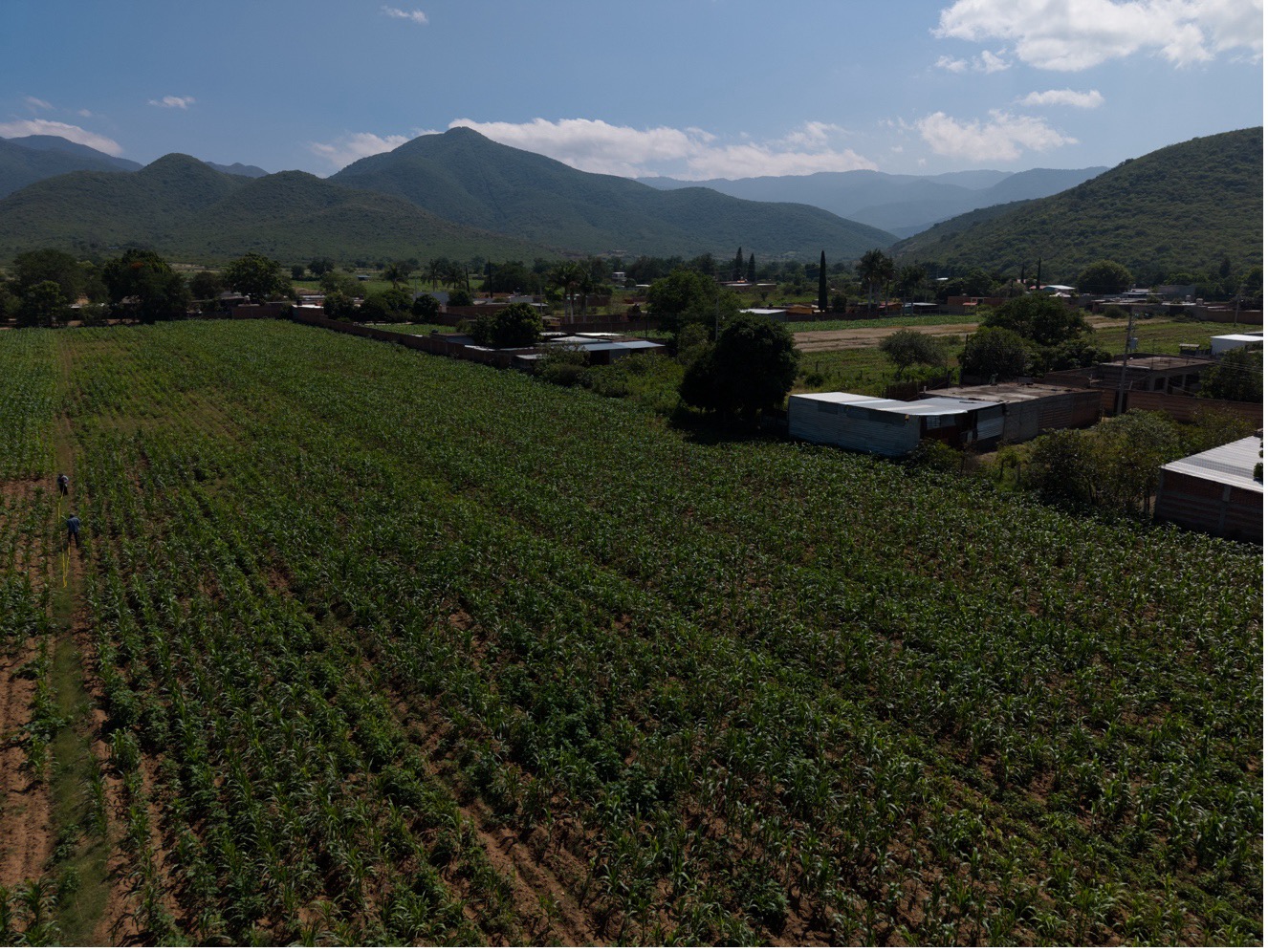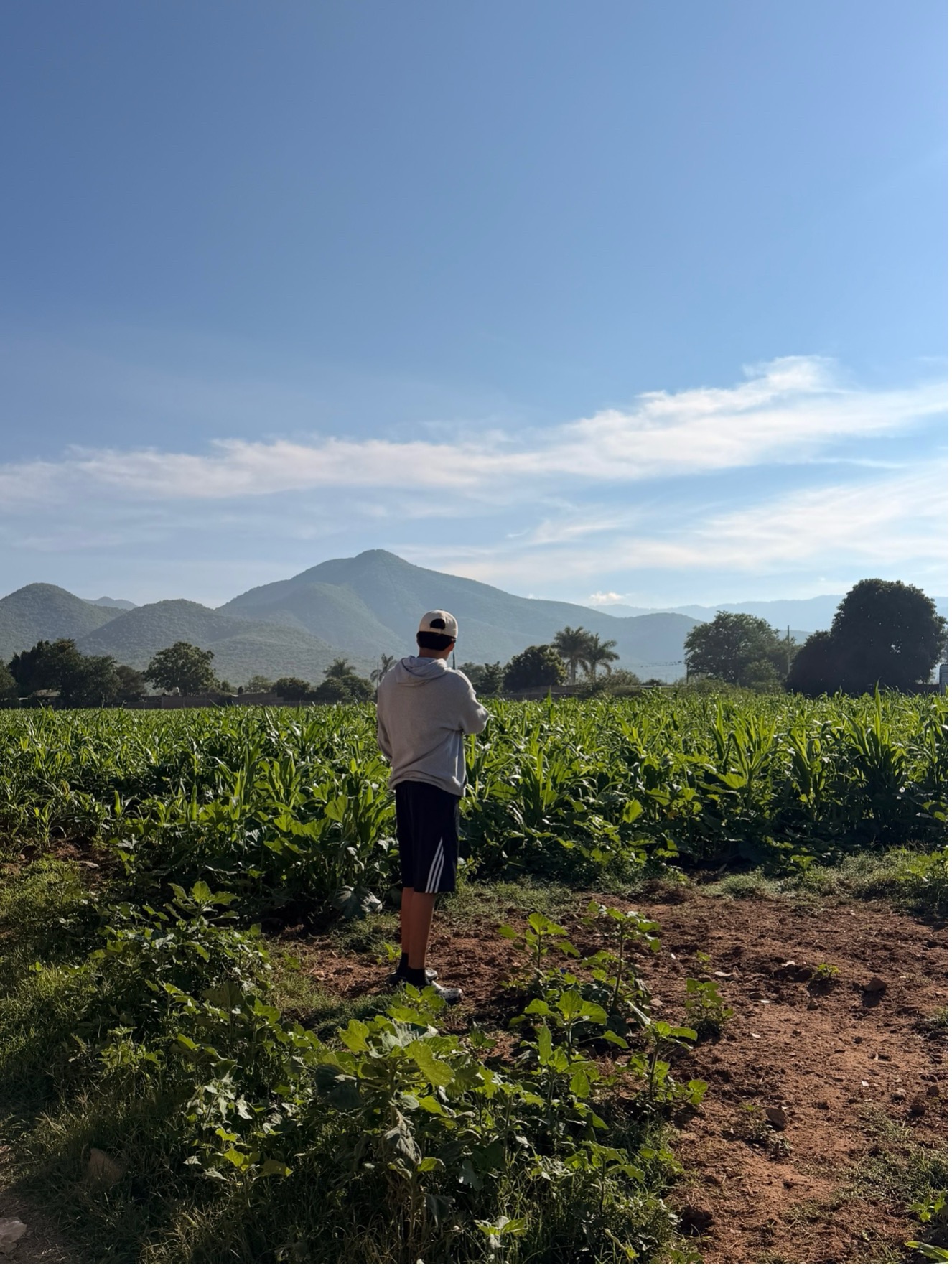
In June 2026, a diverse milpa began to take shape in Santo Domingo Tomaltepec as part of the ongoing collaboration between community members, Cocina Colaboratorio and SeedsValues. The initiative emerged during a series of collective encounters around native maize, when older cultivators and cooks expressed concerns about the gradual disappearance of some local maize varieties and the knowledge and practices associated with them. In response to these conversations, Alejandro Pérez Soto proposed bringing some of these varieties together in a new milpa in a plot owned by his family. The idea germinated, and the collective decided to design a space where increasingly rare local seeds could once again be planted, cared for and encountered alongside one another.
The diverse milpa unfolds as an active process of collective learning. Throughout the agricultural cycle, community members and collaborators have come together to make decisions around the field—from what and how to plant, to caring for the growing milpa and harvesting foods such as squash blossoms. These activities have also opened a space for responding collectively to changing environmental conditions, particularly increasingly unpredictable rainfall and other challenges associated with climate change, while experimenting with agroecological practices adapted to the territory. As the milpa grows, the process continues to deepen our understanding of the repertoires of interdependences through which crop diversity is regenerated, between seeds and soils, plants and weather, agricultural and culinary practices, younger and older generations, the work of humans and other than humans composing a larger territory. The diverse milpa thus functions not as an experiment with a preestablished protocol, but as a living and evolving space where decisions are made together, knowledge is exchanged through practice, and new possibilities for caring for biocultural diversity can be collectively explored.