Seed Inventories
Seed catalogues have been strategic for the implementation of intensive agriculture in post-war Europe. They were intended to promote a restricted series of crop varieties at the expense of existing diversity, by criminalising the sale of unregistered seeds. As catalogues were designed as tools of control and assessment serving the performance of the agroindustry, varieties were selected according to their productivity and fixity. The criteria of Distinctness, Homogeneity and Stability, that conditions the entry of a variety in national seed registers, were enforced to implement an agriculture based on pure line monoculture.
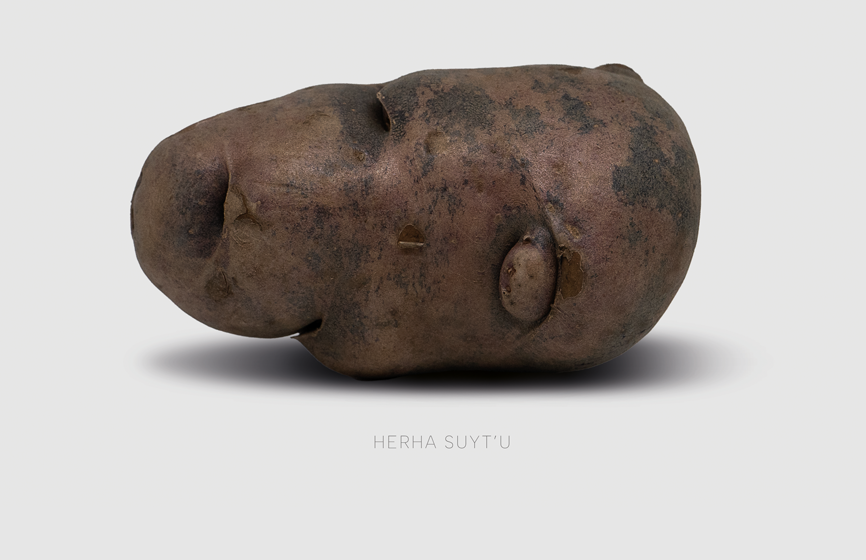
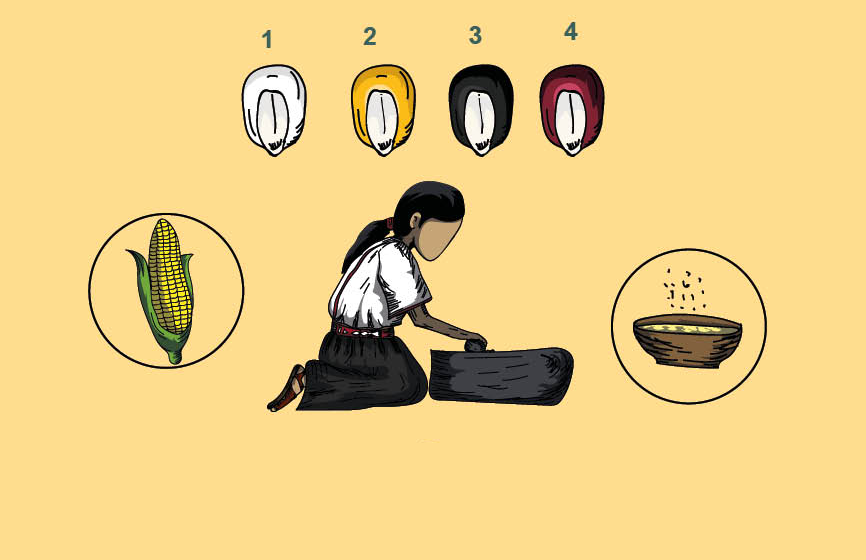
In response to this mode of restrictive documentation, the Flourishing Seeds team experiments with practices of seed inventory. The etymological roots found in the latin in-venire highlight the pragmatic dimension of inventorying as bringing into knowledge, or indeed inventing things through naming and relating. Our inventories feature portraits of maizes, potatoes, and rices articulated in the language of their cultivators in the high diversity fieldsites of the project. Unfolding affiliations based on indigenous epistemologies, they bring out seeds in modalities that are specific to the agricultural collectives in which they are protected. This endevour unfolds ethnographic collaborations as minor sciences that think with the different partakers, vegetal and human, involved in our investigations. In so doing, we seek to activate an “art of cultivating attention” (Stengers 2009, Tsing 2015) for the repopulation of agricultural ecologies facing the devastation of capitalist extractivism.
Yet this field of experimentation raises complex ethical and political challenges. How can we conjure vegetal affect and aesthetic in an inventory? Does the book materiality allow for an open-ended inventory acknowledging seeds’ adaptating capacities ? Through what procedures can we examine the pertinence of an inventory for the different partners involved? Broadly, this initiative explores the very possibility of engaging inventorying practices that would not reproduce Western modes of classification and repertoires of values.