Politics of Tuberous Regards in Andean Practices of Agricultural Care
Author: Olivia Angé
Dates: March 2026
Venue: Cultural Anthropology – Theorizing the Contemporary Series
Link to the publication: www.culanth.org
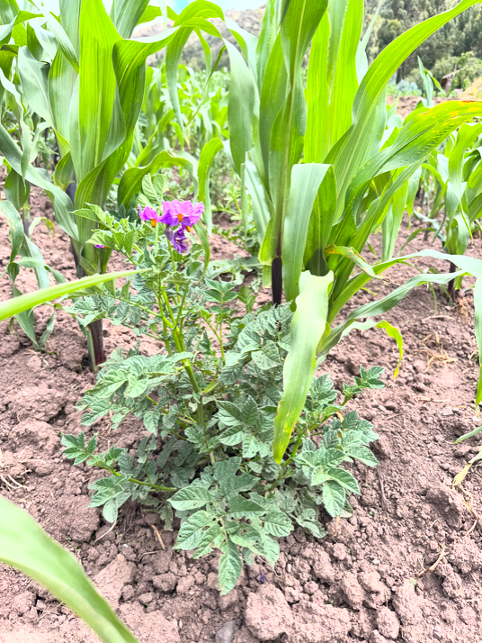
The thousands of different potatoes that inhabit the Andes are the fruit of millennia of uyway, a Quechua word encompassing the work, affection and ethical commitment evoked by the English notion of care (Puig de la Bellacasa 2017). While entailing asymmetrical power relations often associated with care by feminist scholars, uyway also connotes an ideal of mutual nurturance from which both parties emerge (de la Cadena 2015). In the highlands of the Cuzco region, not only do potatoes depend on their growers to flourish; growers, too, depend on potatoes for healthy sustenance. This daily mutual entailment contrasts sharply with human-tuber relations at the margins of maize plots in lower lands, where wilder potato relatives of the araq family thrive. In the Pisac District where I carry ethnographic investigation, maize growers once eagerly awaited the araq harvest, which was vital for enduring the lean season. Although they are exempt from the work of uyway, those who eat araq nonetheless remain attentive to them. This essay is concerned with practices of vegetal care attuned to responsabilities that do not require the daily effort of cultivation. What do we learn about the politics of vegetal care when looking at agricultural relations involving plants that are capable of thriving on their own?